
You do not need to train six days a week to build lean muscle.
You do not need to spend two hours in the gym.
And you definitely do not need to make fitness your entire life.
For busy women, one of the most realistic ways to get stronger and improve body composition is a simple:
3-day strength split.
Three focused workouts per week can give you enough training to challenge your muscles while still leaving room for:
Work
Family
Social plans
Recovery
Walking
Sleep
Real life
The goal is not to do as much as possible.
The goal is to do enough, consistently.
And fall is a great time to build that kind of routine.
Let’s break down how it works.
Why 3 Strength Days Can Be Enough
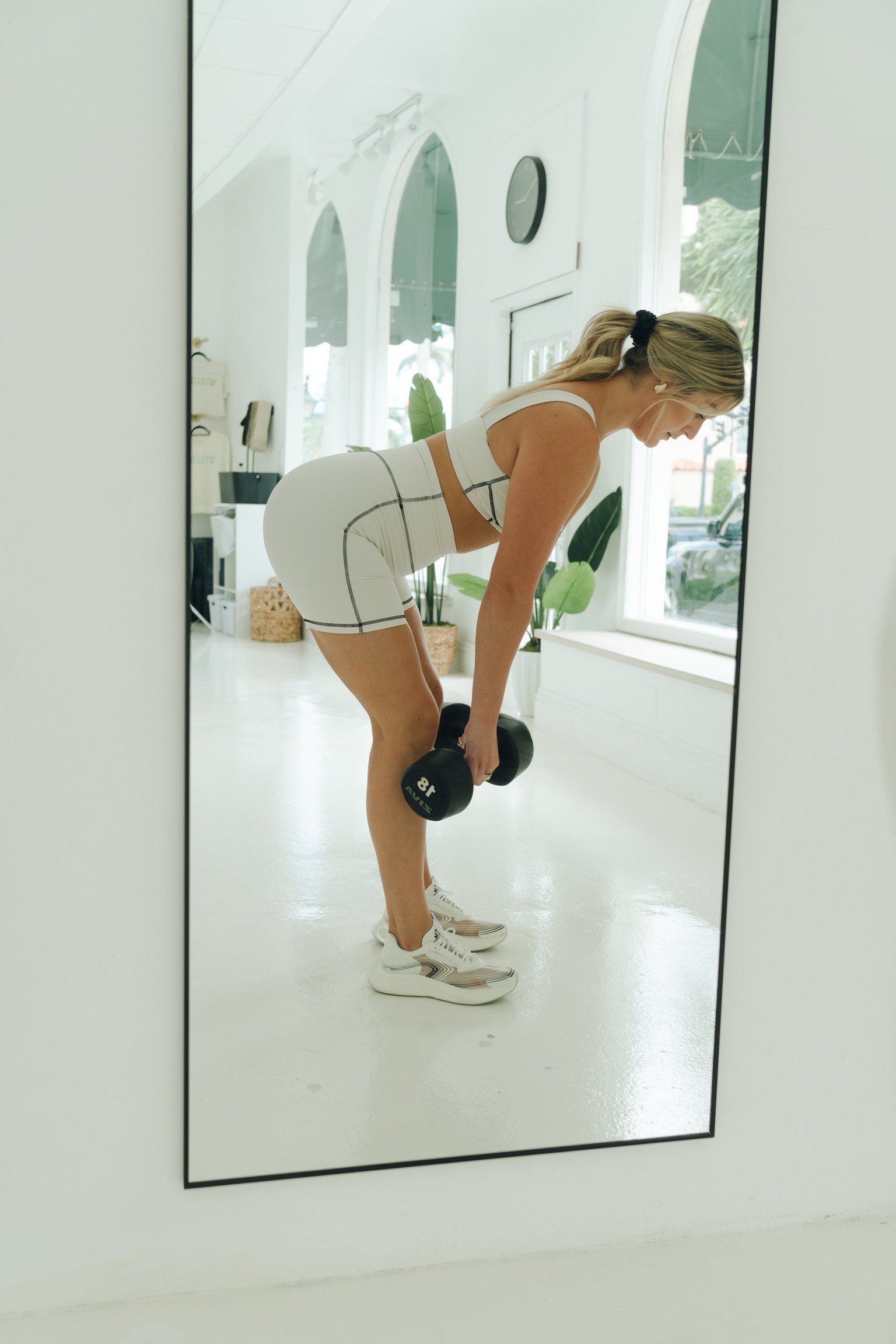
More workouts do not automatically mean better results.
Your muscles need training.
But they also need recovery.
A 3-day strength split gives you enough opportunities to train consistently without making your schedule feel impossible.
For many women, three workouts per week can help support:
Lean muscle
Strength
Body composition
Confidence
Bone health
Metabolism
Long-term function
It also gives you flexibility.
A simple schedule might look like:
Monday
Lower body
Wednesday
Upper body
Friday
Full body
Or:
Tuesday
Lower body
Thursday
Upper body
Saturday
Full body
The exact days do not matter as much as the consistency.
You want enough space between sessions to recover and come back ready to train again.
A 3-day schedule can also feel less overwhelming than trying to fit workouts into every day of the week.
If your plan fits your actual life, you are much more likely to keep doing it.
Day 1: Lower Body Strength
Your first workout focuses on your lower body.
The goal is to train your:
Glutes
Hamstrings
Quads
Hips
Core
You do not need 12 exercises.
A simple workout can be very effective.
Sample Lower Body Workout

Squat
3 sets of 8 to 10 reps
Romanian Deadlift
3 sets of 8 to 10 reps
Reverse Lunge
3 sets of 8 to 10 reps per side
Hip Thrust
3 sets of 10 to 12 reps
Step-Up
2 to 3 sets of 8 to 10 reps per side
Core Exercise
2 to 3 sets
Choose weights that feel challenging while allowing you to maintain good form.
The last few repetitions should require effort.
But you should still feel in control.
You do not need to leave the gym completely exhausted.
A productive workout should challenge you without making recovery impossible.
As you get stronger, gradually progress.
That might mean:
Adding weight
Adding repetitions
Improving your form
Increasing your range of motion
Small improvements count.
Day 2: Upper Body Strength
A lot of women focus heavily on legs and glutes while avoiding upper-body training.
But upper-body strength matters too.

Training your upper body can help support:
Better posture
Stronger shoulders
Back strength
Arm definition
Everyday function
Overall body balance
Your second workout can focus on pushing and pulling movements.
Sample Upper Body Workout
Lat Pulldown
3 sets of 8 to 10 reps
Chest Press
3 sets of 8 to 10 reps
Seated Row
3 sets of 8 to 10 reps
Shoulder Press
3 sets of 8 to 10 reps
Biceps Curl
2 to 3 sets of 10 to 12 reps
Triceps Exercise
2 to 3 sets of 10 to 12 reps
Core Exercise
2 to 3 sets
You do not need to be afraid of lifting challenging weights.
Your goal is not to use the lightest dumbbells possible.
Your goal is to gradually become stronger.
If a weight feels easy for every repetition and you could keep going for another 10 reps, it may be time to increase the challenge.
Strength develops when your muscles have a reason to adapt.
Day 3: Full Body Strength
Your third workout brings everything together.
This is a great way to train major muscle groups again without adding another full training day.
A full-body session may include:
Lower-body movements
Upper-body movements
Glute work
Core work
Sample Full Body Workout
Goblet Squat
3 sets of 8 to 10 reps
Romanian Deadlift
3 sets of 8 to 10 reps
Chest Press or Push-Up
3 sets of 8 to 10 reps
Row
3 sets of 8 to 10 reps
Hip Thrust or Glute Bridge
3 sets of 10 to 12 reps
Shoulder Exercise
2 to 3 sets
Core Exercise
2 to 3 sets
Keep the workout simple.
You do not need to add random exercises just to make the session longer.
Focus on quality movements.
Give yourself enough rest between sets.
Use weights that challenge you.
And keep track of what you are doing.
A simple workout repeated consistently is much easier to progress than a completely different workout every week.
How to Make This Split Actually Build Lean Muscle
The workout is only part of the plan.
If you want to build lean muscle, your habits outside the gym matter too.
Progress Your Workouts
Do not use the same weights forever.
Over time, try to:
Add a little weight
Complete another repetition
Improve your form
Use better control
Increase your range of motion
You do not have to progress every session.
Look for gradual improvement over time.
Your workouts are only one piece of the puzzle. What you eat matters just as much when it comes to supporting energy, recovery, and lean muscle.
Not sure what foods to focus on or how to put together balanced meals?
Check out my blog, “The Best Foods for Hormone Balance, Energy & Lean Muscle in Women (And How to Build Meals That Actually Support Your Goals),” for practical food ideas and simple ways to build meals that support your fitness goals.
Prioritize Protein

Protein supports muscle recovery and maintenance.
Try including a protein source with your meals.
Examples include:
Eggs
Greek yogurt
Cottage cheese
Chicken
Turkey
Fish
Lean beef
Tofu
Edamame
Protein shakes
Keep it simple.
You do not need a complicated meal plan to start eating more intentionally.
Eat Enough
Building muscle requires energy.
If you are constantly under-eating, skipping meals or trying to survive on very little food, your workouts may suffer.
Focus on balanced meals that include:
Protein
Carbohydrates
Produce
Healthy fats
Carbohydrates are especially helpful for fueling strength workouts.
You do not need to remove them.
Walk on Your Non-Training Days
Your rest days do not have to mean doing nothing.
Walking is an easy way to stay active without adding another demanding workout.
Try:
A morning walk
A walk after dinner
Walking during phone calls
A short walk after lunch
Keep movement simple.
Sleep and Recover
Recovery is part of the program.
Your body needs time to adapt to your training.
Try to prioritize:
Consistent sleep
Rest days
Hydration
Balanced meals
You do not need to earn your rest.
Rest helps support progress.
If you’re ready to make strength training part of your weekly routine, explore my Storefront for simple, practical tools designed to help you plan your workouts, track your progress, and build habits that actually fit your life.
A Simple Weekly Schedule
Here is one example:
Monday
Lower Body Strength
Tuesday
Walking or light movement
Wednesday
Upper Body Strength
Thursday
Walking and recovery
Friday
Full Body Strength
Saturday
Light activity, walking or optional mobility
Sunday
Rest
This is not the only way to structure your week.
Move the days around based on your schedule.
The best routine is the one you can keep showing up for.
Common 3-Day Strength Split Mistakes

Making Every Workout Too Long
More exercises are not always better.
You can get a lot done in 45 to 60 minutes with a focused plan.
Using Weights That Are Too Light
Your muscles need enough resistance to be challenged.
Choose a weight that makes the final repetitions feel difficult while keeping your form strong.
Changing the Program Every Week
Your body needs time to adapt.
Repeat your main exercises long enough to track progress.
Skipping Recovery
You do not need another intense workout every day.
Use your non-strength days for walking, lighter activity and recovery.
Expecting Immediate Results
Muscle takes time to build.
Do not judge your program after one week.
Give yourself time to get stronger.
Conclusion
You do not need a complicated workout schedule to build lean muscle.
You need a routine you can repeat.
A simple 3-day strength split can help you train your entire body while leaving enough time for recovery and everything else in your life.
Focus on:
3 quality strength workouts each week
Challenging weights
Gradual progression
Balanced meals
Enough protein
Daily movement
Consistent recovery
The goal is not to spend more time exercising.
The goal is to make the time you do spend training count.
This fall, keep it simple.
Train smart.
Get stronger.
And give your body enough time to respond.
Frequently Asked Questions
1. Is 3 days of strength training enough to build muscle?
For many women, yes.
Three well-planned strength workouts per week can provide enough training stimulus to build strength and support lean muscle when paired with consistent nutrition and recovery.
The quality and progression of your workouts matter more than simply adding more training days.
2. How long should each workout take?
A focused strength workout can often be completed in about 45 to 60 minutes.
You do not need to spend hours at the gym.
Choose a manageable number of exercises and focus on completing each movement with good form and enough effort.
3. Should I do cardio on the other days?
You can, but you do not have to make every non-strength day an intense cardio day.
Walking and other light-to-moderate activity can be enough for many women.
If you enjoy cardio, you can include it based on your goals, energy and recovery.
4. How heavy should I lift?
Choose a weight that feels challenging by the end of your set but still allows you to maintain good form.
If every repetition feels very easy, you may need more resistance.
If your form breaks down immediately, the weight may be too heavy.
5. When should I increase the weight?
If you can complete your planned repetitions with good form and the exercise no longer feels very challenging, you may be ready to increase the weight slightly.
Progress does not need to happen every week.
Small increases over time are enough.
Get The WELLTHY 3-Day Strength Split Planner inside Substack, a practical workout guide designed to help you build strength, grow lean muscle, and stay consistent without spending hours in the gym. You’ll get a simple, structured weekly workout schedule that breaks your strength training into three manageable sessions focusing on lower body, upper body, and full body strength, with built-in recovery days to support your progress. Whether you’re just getting started or looking for a more sustainable routine, this planner helps you organize your workouts, track your consistency, and build lasting strength without feeling overwhelmed by your schedule.