
The Best Workout Split for Women Who Want Defined Muscles
If you want defined arms, lifted glutes, and visible muscle tone, random workouts won’t cut it.
The key isn’t doing more, it’s training smarter.
A workout split gives your body structure. It tells you what to train, when to train it, and how often. That structure is what leads to muscle definition.
Let’s break down the best workout splits for women who want defined muscles without overtraining or living in the gym.
What Creates Muscle Definition?
Before choosing a split, understand what actually creates definition.
Defined muscles come from:
Building lean muscle
Reducing excess body fat
Eating proper macronutrients, aka, enough protein
Training with progressive overload
You cannot “tone” without building muscle. Muscle growth requires consistency and recovery.
That’s where a proper split matters.
My Top 3 Favorite Workout Splits
The “best” split depends on how many days you can realistically train.
Here are the most effective options.
3-Day Full Body Split

Ideal for women with limited time who want results.
Monday: Full Body
Wednesday: Full Body
Friday: Full Body
Each workout includes:
Lower body compound movement: squat or lunge
Hip hinge: deadlift or RDL
Push: chest or shoulders
Pull: back movement
Core: multiple planes of motion
Training full body 3 times per week hits each muscle group multiple times, which supports growth without excessive volume. Workouts can be 30–45 minutes.
Simple. Effective. Sustainable.
4-Day Upper / Lower Split
Ideal for women who have the ability to train 4 days per week.
Monday: Upper Body
Tuesday: Lower Body
Thursday: Upper Body
Friday: Lower Body
Upper body days focus on:
Shoulders
Back
Chest
Arms
Lower body days focus on:
Glutes
Hamstrings
Quads
Core
You train each muscle group twice per week with enough recovery between sessions. This is a sweet spot for building definition. This split is highly effective for shaping glutes and defining shoulders and arms.
5-Day Glute & Upper Emphasis Split
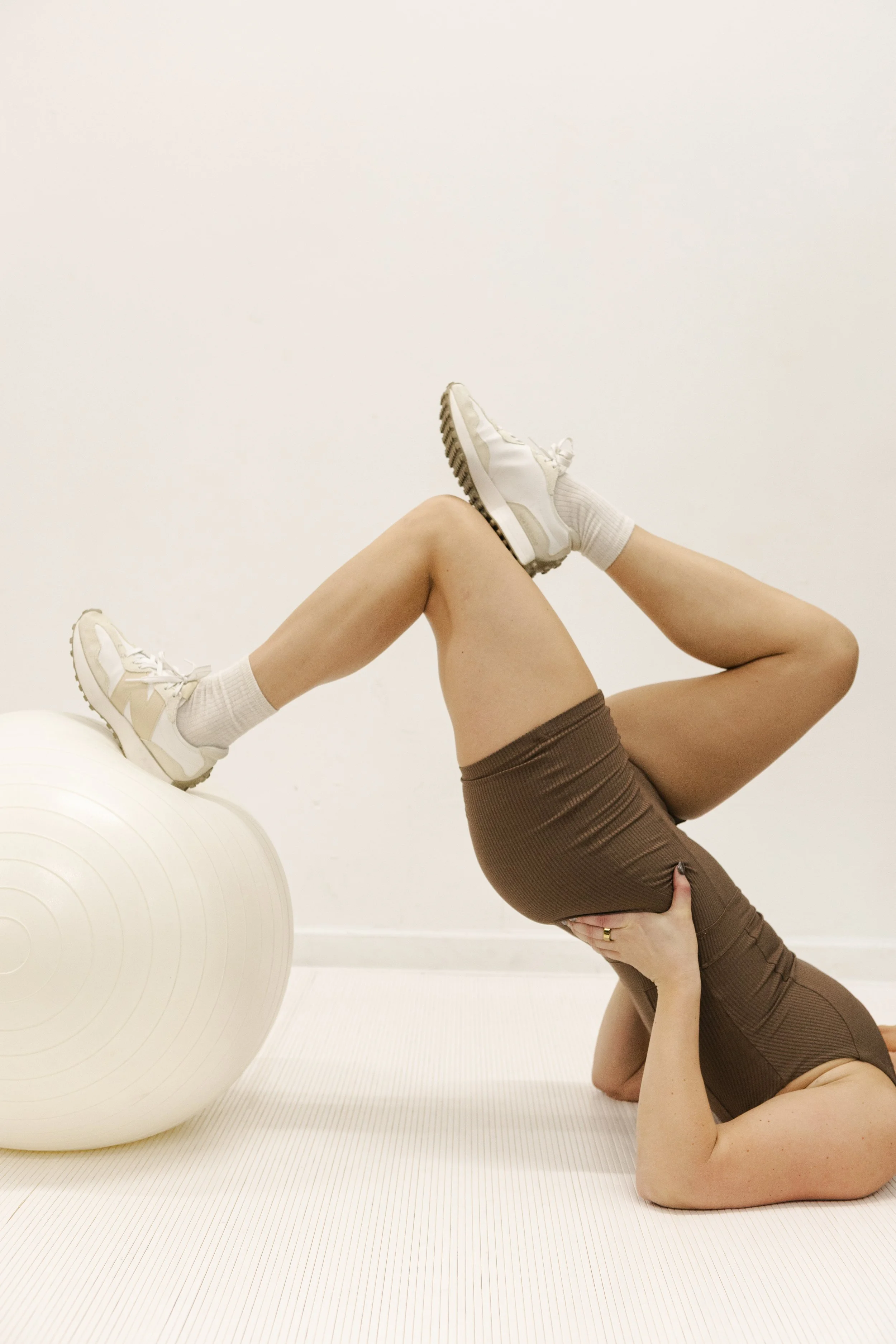
Ideal for women focused on specific muscle groups.
Structure example:
Day 1: Glutes & Hamstrings
Day 2: Upper Push
Day 3: Upper Pull
Day 4: Glutes & Quads
Day 5: Shoulders & Arms
Higher frequency for priority muscles. More volume. More refinement. This requires adequate recovery, sleep, and protein. Not necessary for beginners, but powerful for intermediate lifters. And honestly, this is my favorite way to structure my week!
How Often Should You Train Each Muscle Group?
For muscle definition, research supports:
Training each muscle group 2 times per week.
More is not always better.
Muscle grows during recovery, not during the workout itself.
The Role of Progressive Overload
No workout split works if you never increase the challenge.
Progressive overload means:
Adding weight
Increasing reps
Improving form
Slowing tempo
Reducing rest time strategically
If your weights never change, your body has no reason to adapt. Defined muscles come from progressive stimulus.
I’ve put together equipments I personally use and recommend, from resistance bands and dumbbells to recovery tools. These are simple, effective tools that help you train consistently, stay on track and get better results from your workouts.
Cardio: How Much Is Too Much?
Many women trying to get defined muscles overdo cardio.
Excessive cardio can:
Interfere with recovery
Increase cortisol
Reduce strength performance
Instead:
Lift 3–4 times per week
Walk daily: aim for 7–10k steps
Add 1–2 light cardio sessions if desired
Strength training should be the priority.
If you’ve ever felt like you need to do more workouts, more cardio or spend more time in the gym to see results, this is where most women get stuck.
I break this down in more detail in The Myth of “More is Better”: Why Smart Training Wins for Busy Women, where I explain why doing less, but doing it right, leads to better strength, better recovery and real muscle definition.
Nutrition: The Missing Piece

You cannot out-train poor nutrition.
To build defined muscles:
Eat 0.7–1g protein per pound of bodyweight
Prioritize high-protein meals
Include fiber for blood sugar stability
Avoid extreme calorie restriction
Muscle requires fuel. Chronic under-eating flattens progress.
Sample 4-Day Upper/Lower Split
Upper Day
Dumbbell shoulder press
Lat pulldown or assisted pull-up
Dumbbell bench press
Seated row
Lateral raises
Tricep pushdowns
Lower Day
Barbell or dumbbell squats
Romanian deadlifts
Hip thrusts
Walking lunges
Leg curl
Core work
Repeat with slight variation later in the week.
Frequently Asked Questions (FAQs):
1. What is the best workout split for muscle definition?
For most women, a 4-day upper/lower split is highly effective. It trains each muscle group twice per week with sufficient recovery.
2. Can I get defined muscles training only 3 days per week?
Yes. A well-structured full-body split 3 times weekly can absolutely build muscle definition when paired with proper nutrition.
3. Should women train glutes more often?
Glutes respond well to 2–3 focused sessions per week. Volume and progressive overload matter more than frequency alone.
4. How long before I see muscle definition?
Strength gains often show in 2–3 weeks. Visible muscle definition typically appears after 6–8 consistent weeks, depending on nutrition and body fat levels.
5. Is cardio necessary for definition?
Cardio supports heart health and calorie balance, but muscle definition primarily comes from resistance training.
Get The WELLTHY Plateau Breaker System Guide inside Substack, designed to help you push past stalled progress, build lean muscle and start seeing results again without doing more or starting over. This guide shows you how to adjust your training, apply progressive overload the right way and fine-tune your routine so your workouts actually work again.