
You have probably heard the word “toning” everywhere.
Tone your arms.
Tone your stomach.
Tone your legs.
Do lighter weights for a more toned look.
But here is the problem:
“Toning” is not really a separate fitness process.
What most women mean when they say they want to look more toned is actually this:
Build or maintain lean muscle while reducing enough body fat for that muscle to become more visible.
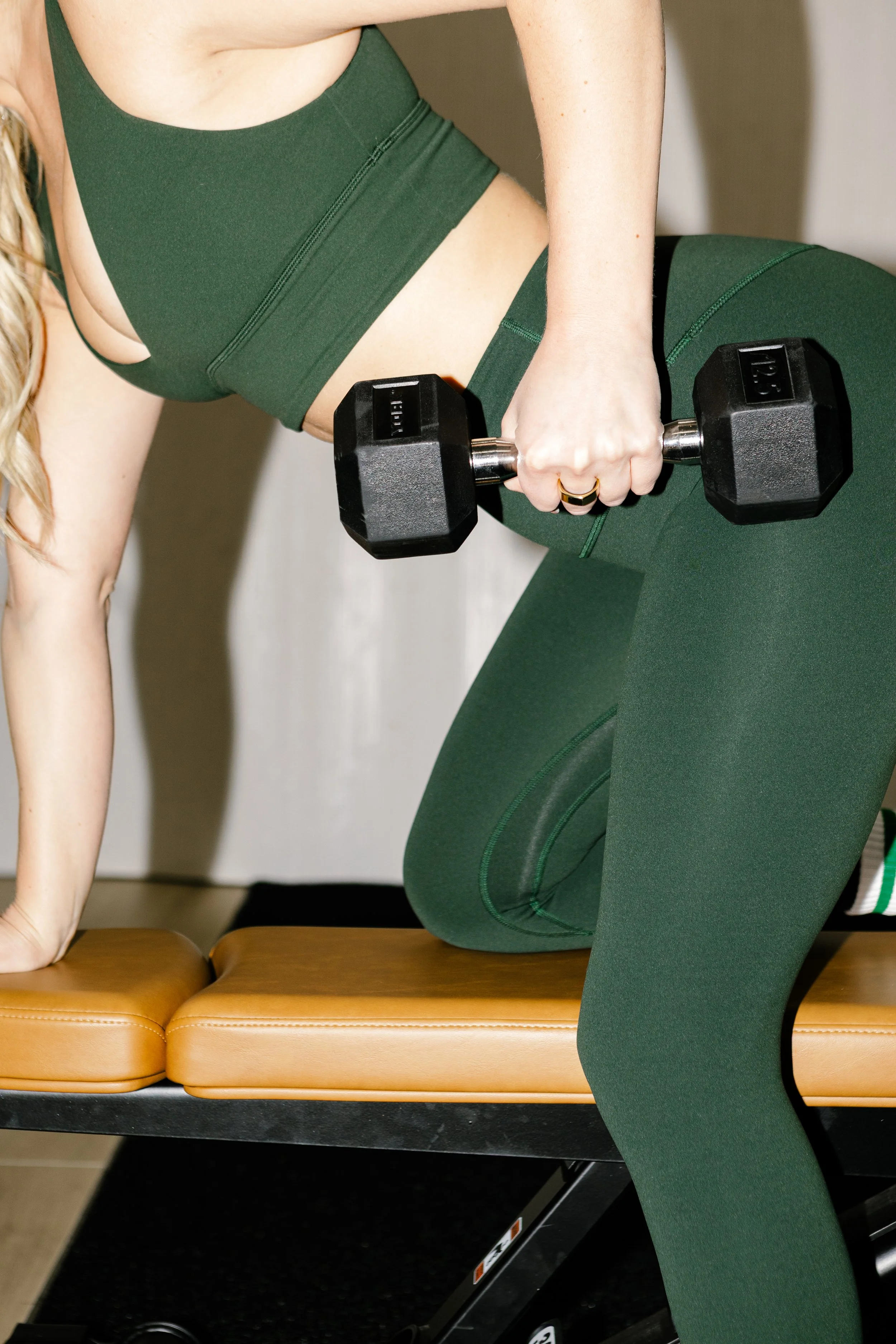
That is body recomposition.
And it does not require endless cardio, tiny dumbbells or hours of high-rep workouts.
It requires a smarter approach to strength training, nutrition, recovery and consistency.
If your goal is to feel stronger, look more defined and improve your body composition without following another extreme plan, this is the approach to focus on.
Let’s break it down.
What “Toned” Actually Means
There is no special type of muscle called “toned muscle.”
Your muscles can:
Grow
Get stronger
Stay the same
Lose size when they are not being challenged enough
Your body fat can also increase or decrease.
The combination of muscle and body fat affects how your body looks.
When someone says they want:
More defined arms
A firmer-looking stomach
More shape in their legs
Stronger glutes
A more athletic look
they are usually describing body recomposition.
Body recomposition means improving the balance between lean muscle and body fat.
That may mean:
Building lean muscle
Losing body fat
Maintaining muscle while losing fat
Getting stronger while your measurements change
Improving how your body looks without chasing a dramatic change on the scale
This is why simply losing weight does not always create the result you want.
If you lose weight without maintaining or building muscle, you may become smaller without necessarily looking more defined.
The goal is not always to weigh less.
The goal is often to improve your body composition.
Stop Training Like You Are Afraid of Muscle
One of the most common myths women still hear is:
Heavy weights will make you bulky.

Because of that, many women spend years doing:
Very light weights
Extremely high repetitions
Endless resistance-band circuits
Cardio-focused workouts
Random “toning” exercises
Workouts that change every day
But if your goal is to look stronger and more defined, you need enough resistance to actually challenge your muscles.
Strength training may include movements such as:
Squats
Lunges
Romanian deadlifts
Hip thrusts
Rows
Lat pulldowns
Chest presses
Shoulder presses
Step-ups
Core work
You do not need to lift the heaviest weights in the gym.
But your workouts should feel challenging.
The last few repetitions of a set should require effort while you are still able to maintain good form.
For many women, 3 strength-training sessions per week can be a strong starting point.
That could look like:
Monday
Lower body
Wednesday
Upper body
Friday
Full body
Or:
Monday
Full body
Wednesday
Full body
Friday
Full body
Both approaches can work.
The best program is the one you can follow consistently.
You do not need seven workouts per week.
You need enough quality strength training to give your muscles a reason to adapt.
Knowing you need to strength train is one thing. Knowing exactly what to do when you get to the gym is another.
If you want a simple routine you can actually follow, check out The Workout Routine My Clients Use to Build Lean Muscle & Confidence.
Progressive Overload Is What Changes Your Shape
Doing the same workout with the same resistance forever gives your body very little reason to change.
This is where progressive overload becomes important.
Progressive overload means gradually asking your muscles to do a little more over time.
That might mean:
Adding weight
Adding repetitions
Improving your form
Increasing your range of motion
Slowing down an exercise
Completing more quality sets
Progressing to a more challenging variation
For example:
Maybe you start doing Romanian deadlifts with 20-pound dumbbells.
A few weeks later, you are able to use 25 pounds.
Then you increase your repetitions.
Then your form improves.
That is progress.

It does not need to happen every workout.
You do not need to add weight every single week.
Small improvements made consistently over several months can create much bigger changes than constantly switching workouts because you are looking for something new.
Instead of asking:
Did this workout make me sweat enough?
Start asking:
Am I getting stronger?
Sweating is not the goal.
Feeling exhausted is not the goal.
Being sore for four days is not the goal.
Progress is the goal.
Track your workouts when you can.
Write down:
The exercises you did
The weights you used
Your repetitions
How the workout felt
That makes it much easier to see whether you are actually moving forward.
Nutrition Matters More Than Another “Toning” Workout

Strength training helps build and maintain muscle.
Nutrition plays an important role in supporting that muscle and your overall body-composition goals.
But body recomposition does not require an extreme diet.
I’ve put together some of my favorite products for supporting a strong, consistent routine, from workout essentials and protein options to recovery and everyday wellness favorites.
You do not need to:
Cut all carbohydrates
Skip meals
Avoid eating after a certain time
Live on salads
Remove every food you enjoy
Follow a perfect meal plan
Instead, focus on meals that support training, recovery and consistency.
A simple balanced meal can include:
Protein
Chicken, eggs, Greek yogurt, cottage cheese, fish, lean beef, turkey, tofu or another protein source
Carbohydrates
Rice, potatoes, oats, fruit, pasta, bread, beans or another carbohydrate source
Produce
Fruit or vegetables
Healthy Fats
Avocado, nuts, seeds, olive oil or another fat source
Protein is especially useful when your goal is body recomposition.
Protein can help support:
Muscle recovery
Muscle maintenance
Strength goals
Fullness
More balanced meals
A simple habit is to build your meals around a protein source first.
For example:
Breakfast
Greek yogurt + berries + oats
Lunch
Chicken + rice + vegetables
Snack
Cottage cheese + fruit
Dinner
Salmon + potatoes + vegetables
You also do not need to automatically cut carbohydrates.
Carbohydrates can help fuel your workouts and everyday activity.
If you want to train harder and recover well, having enough energy matters.
Instead of asking:
What do I need to remove from my diet?
Try asking:
What does this meal need to support my goals?
That small shift can make nutrition feel much more sustainable.
Fat Loss and Muscle Gain Require Patience
Body recomposition can sometimes feel slower than a traditional weight-loss plan because the scale may not change dramatically.
That does not mean nothing is happening.
Imagine losing some body fat while maintaining or building lean muscle.
Your scale weight may stay relatively similar.
But you might notice:
Your clothes fit differently
Your waist measurement changes
Your arms or legs look more defined
You feel stronger
Your workouts improve
Your body looks different in photos
You feel more confident
This is why the scale should not be your only measure of progress.
You can also track:
Strength improvements
Progress photos
Measurements
How your clothes fit
Energy
Workout performance
Consistency
Body recomposition is usually about what happens over months, not what happens after one perfect week.
You do not need dramatic changes every few days.
You need enough consistency for your body to adapt.
That also means avoiding the “start over Monday” cycle.
One missed workout does not ruin your progress.
One meal out does not ruin your progress.
One busy week does not mean you need to give up.
Get back to your normal routine and keep going.
Consistency matters more than perfection.
The Smart Body Recomposition Method
You do not need a complicated plan.
Start with the basics.
Strength Train 3 Times Per Week
Choose a repeatable strength program built around foundational movements.
You might include:
Squats
Hinges
Lunges
Pushes
Pulls
Glute exercises
Core work
Track your workouts so you can gradually improve.
Prioritize Protein
Include a protein source with your meals to support muscle recovery and more balanced eating.
You do not need to make this complicated.
Start by asking:
Where is the protein in this meal?
Eat Enough to Support Your Training
Avoid turning every body-composition goal into an aggressive diet.
Your body needs energy to train and recover.
Extremely low-calorie diets may make it harder to perform well in your workouts and maintain consistency.
Keep Daily Movement Consistent
Not every activity needs to be intense.
Walking can be one of the simplest ways to increase your overall movement.
Try:
Walking after meals
Taking a morning walk
Walking during phone calls
Parking farther away
Taking the stairs
Adding short movement breaks during the day
You do not need to obsess over a perfect step count.
Start by moving more consistently.
Recover
Recovery matters.
Try to support your training with:
Consistent sleep
Rest days
Hydration
Balanced meals
Lower-intensity movement
Your body needs time to recover from the work you are doing.
Give It Time
You do not need to change your program every two weeks.
Choose a realistic routine and give yourself enough time to see what it can do.
A simple week might look like:
Monday
Strength workout
Tuesday
Walking or light activity
Wednesday
Strength workout
Thursday
Walking or recovery
Friday
Strength workout
Saturday
Light activity
Sunday
Rest
It is simple.
But simple can work.
What Body Recomposition Progress Can Look Like
Progress does not always mean losing five pounds.
It may look like:
Using heavier weights
Completing more repetitions
Feeling stronger during your workouts
Having more energy
Seeing more muscle definition
Losing inches
Feeling better in your clothes
Being more consistent with your meals
Recovering better
Having fewer all-or-nothing weeks
These things count.
Your progress does not have to look dramatic to be meaningful.
Common Body Recomposition Mistakes
Doing Too Much Cardio
Cardio can absolutely be part of a healthy routine.
But you do not need to make every workout about burning as many calories as possible.
If body recomposition is your goal, strength training should have an important place in your routine.
Constantly Changing Your Workouts
Variety can be fun.
But changing every exercise every week makes progress much harder to track.
Give your program time to work.
Eating Too Little
It can be tempting to slash calories when you want faster results.
But being overly restrictive can leave you tired, hungry and struggling in your workouts.
Your plan should support your training, not fight against it.
Ignoring Recovery
More is not always better.
Your body needs sleep and recovery to support training.
Only Watching the Scale

Your scale weight is only one piece of information.
Body recomposition can happen even when your weight changes slowly.
Look at the bigger picture.
Conclusion
You do not need another workout promising to “tone your arms in 10 minutes.”
You do not need to spend hours trying to burn off everything you eat.
And you do not need to be afraid of strength training.
If you want a stronger, leaner and more defined body, focus on what actually supports that goal:
Build lean muscle
Strength train consistently
Progress your workouts
Eat balanced meals
Prioritize protein
Stay active
Recover well
Give your body time to change
The goal is not to become smaller at any cost.
The goal is to build a stronger body with a healthier balance of muscle and body fat.
That is body recomposition.
And for women who want results without extreme rules or all-or-nothing thinking, it can be a much more realistic way to train.
Frequently Asked Questions
1. What does “toning” actually mean?
“Toning” is usually used to describe looking leaner, firmer and more defined.
In reality, that look comes from building or maintaining lean muscle while reducing enough body fat for that muscle to become more visible.
That is body recomposition.
You are not creating a special type of “toned” muscle.
You are improving the balance between muscle and body fat.
2. Can women build muscle without becoming bulky?
Yes.
Strength training can help women build lean muscle, improve definition and get stronger.
Building a noticeably large amount of muscle generally requires significant time, consistent training and intentional nutrition.
You do not need to avoid challenging weights because you are worried that a few strength workouts will suddenly make you bulky.
Focus on getting stronger gradually.
3. How many days a week should I strength train for body recomposition?
For many women, 3 strength-training workouts per week is a practical starting point.
That gives you enough opportunities to challenge your muscles while still leaving time for recovery and everyday life.
The most important thing is choosing a schedule you can follow consistently and gradually progressing your workouts over time.
4. Do I need to lose weight to look more defined?
Not necessarily.
Your body can change even when the number on the scale does not change very much.
You may lose body fat while maintaining or building muscle.
That can change:
How your clothes fit
Your measurements
Your muscle definition
How your body looks in photos
This is why strength, measurements, photos and how your clothes fit can also be useful ways to track progress.
5. How long does body recomposition take?
Body recomposition takes time.
It is better to think in terms of months rather than expecting dramatic changes in a few days or weeks.
Focus on consistently:
Strength training
Progressing your workouts
Eating balanced meals
Prioritizing protein
Staying active
Sleeping and recovering well
Small improvements made repeatedly can lead to meaningful changes in strength, muscle definition and overall body composition.
The goal is not to rush the process.
The goal is to build habits you can actually maintain.
Get The WELLTHY Fall Recomposition Tracker inside Substack, a practical tracker designed to help you measure progress beyond the scale and stay consistent with your fall fitness goals. You’ll track key areas like strength, energy, workout performance, consistency, recovery, and confidence so you can see the changes happening even when the scale doesn’t move. The tracker gives you a simple way to compare where you started with where you are now, recognize your wins, and stay focused on building lean muscle, improving your routine, and creating sustainable progress throughout the season.