
The Workout Routine My Clients Use to Build Lean Muscle & Confidence
You want to feel stronger.
Build more muscle.
Feel confident in the gym.
And finally stop wondering if your workouts are actually doing anything.
But every time you look online, you see something different.
One person says:
Train six days a week.
Another says:
Only lift heavy.
Someone else says:
Do more cardio.
And then you see complicated workouts with 12 exercises that take nearly two hours to finish.
It does not have to be that complicated.
Building lean muscle comes down to a few basic things:
Strength training consistently
Choosing effective exercises
Gradually getting stronger
Eating enough protein
Recovering between workouts
Giving your body enough time
You do not need to train every day.
You do not need to leave the gym exhausted.
And you definitely do not need to know every exercise before you start.
The goal is to create a workout routine you can repeat, improve and feel confident doing.
Let’s break it down.
Why Strength Training Matters for Women
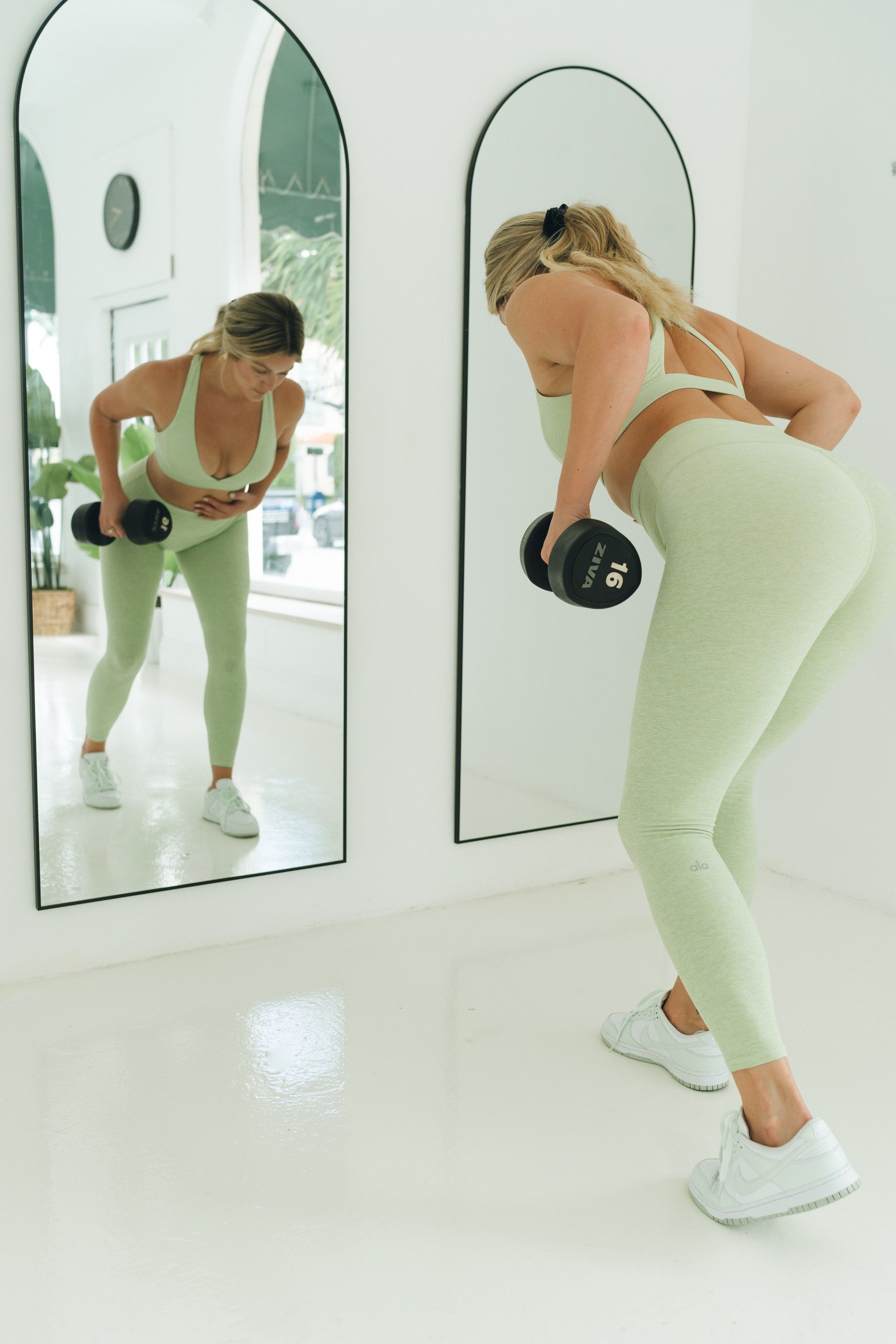
Strength training does much more than change how your body looks.
It can help support:
Muscle growth
Strength
Bone health
Balance
Physical function
Body composition
Confidence
Independence as you age
Muscle also gives your body shape.
If your goal is to look:
Stronger
More defined
Firmer
More athletic
resistance training should be a major part of your plan.
Cardio can support cardiovascular health and overall fitness.
But cardio alone does not provide the same muscle-building stimulus as strength training.
You Do Not Need to Train Every Day
One of the biggest misconceptions about fitness is that more workouts automatically mean better results.
They do not.
Your muscles need both:
Training
and
Recovery.
For many women, three strength-training sessions per week can be an effective place to start.
A simple schedule might look like:
Monday - Full-body strength
Tuesday - Walking or light activity
Wednesday - Full-body strength
Thursday - Rest or walking
Friday - Full-body strength
Saturday - Optional light cardio, walking or recreational activity
Sunday - Rest
You can eventually train four or more days per week if that fits your goals and lifestyle.
But you do not need to start there.
Consistency matters more than creating the busiest workout schedule possible.
What Makes a Good Strength Workout?
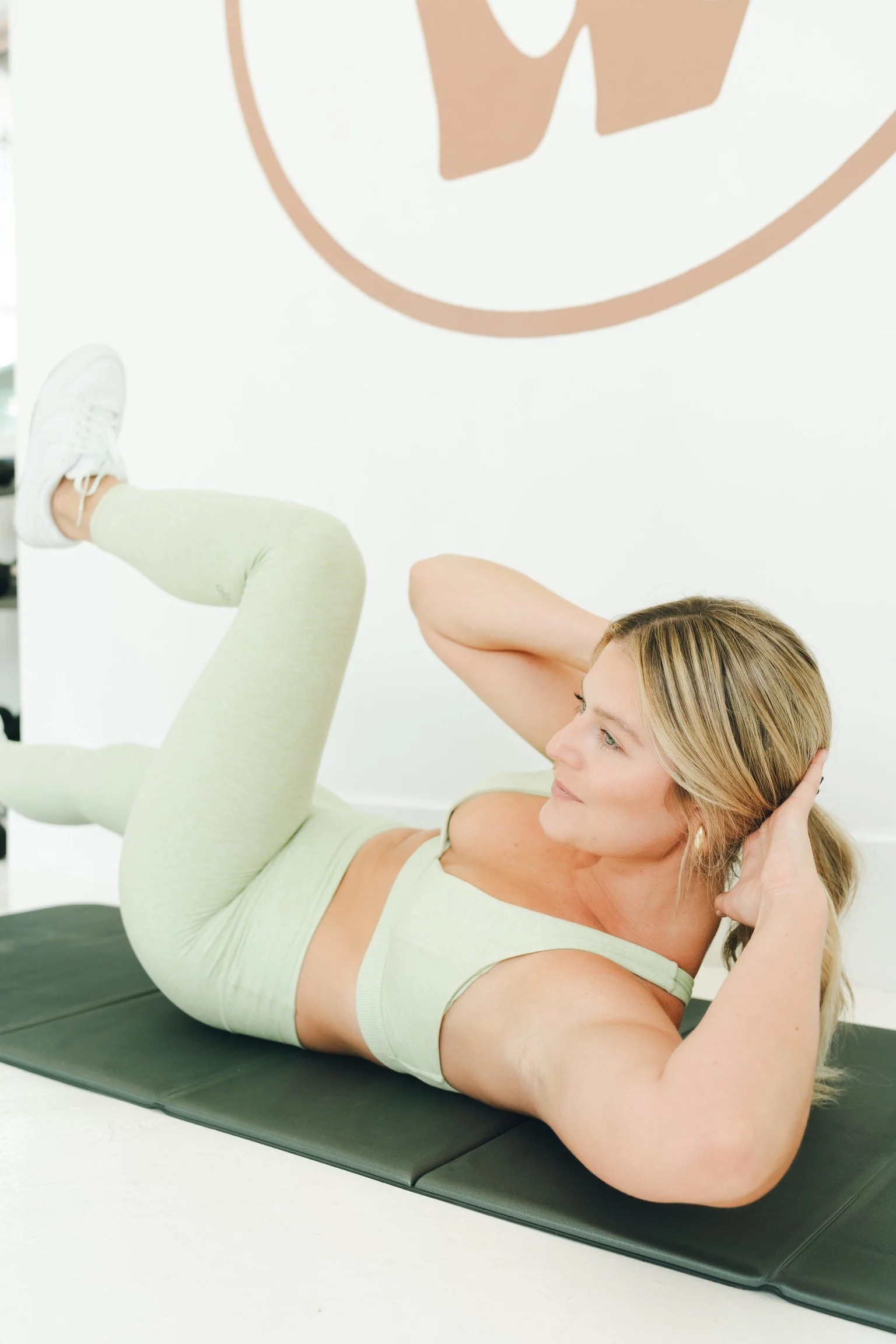
You do not need 15 different exercises.
A good workout usually includes a combination of movement patterns.
For example:
Squat
Hinge
Push
Pull
Single-leg movement
Core work
These movements train multiple muscle groups and make it easier to build a balanced program.
Examples include:
Squat Movements
Goblet squat
Leg press
Back squat
Front squat
Hinge Movements
Romanian deadlift
Dumbbell deadlift
Hip thrust
Glute bridge
Push Movements
Dumbbell chest press
Push-ups
Shoulder press
Machine chest press
Pull Movements
Seated row
Dumbbell row
Lat pulldown
Assisted pull-up
Single-Leg Movements
Lunges
Split squats
Step-ups
Single-leg press
Core Movements
Planks
Dead bugs
Pallof presses
Farmer carries
You do not have to use every exercise.
Choose a small number and get better at them.
The 3-Day Lean Muscle Workout Routine
This routine focuses on full-body strength training three times per week.
The exercises can be adjusted based on your experience, equipment and physical ability.
Start with weights that allow you to maintain good form.
You should feel challenged near the end of each set without completely losing control of the movement.
Workout 1
Goblet Squat
3 sets of 8 to 12 reps
Hold a dumbbell or kettlebell close to your chest.
Focus on:
Controlled movement
Keeping your feet stable
Maintaining good posture
Using a comfortable range of motion
The goblet squat trains your:
Quads
Glutes
Core
If you are new to squatting, start light.
Dumbbell Romanian Deadlift
3 sets of 8 to 12 reps
This movement primarily trains your:
Hamstrings
Glutes
Back
Think about pushing your hips backward while keeping the weights close to your legs.
You should feel tension through the back of your legs.
Do not worry about getting the dumbbells all the way to the floor.
Your range of motion will depend on your mobility and technique.
Dumbbell Chest Press
3 sets of 8 to 12 reps
You can perform this on a bench or on the floor.
This exercise trains your:
Chest
Shoulders
Triceps
Control the weight on the way down.
Then press the dumbbells back up.
Seated Cable Row
3 sets of 8 to 12 reps
The seated row trains your:
Upper back
Lats
Arms
Focus on pulling your elbows back without shrugging your shoulders.
You can also use a resistance band or dumbbells if a cable machine is not available.
Walking Lunges
2 to 3 sets of 8 to 10 reps per leg
Lunges help build:
Glutes
Quads
Balance
Single-leg strength
If walking lunges feel uncomfortable, try:
Reverse lunges
Split squats
Step-ups
Choose the variation that works best for you.
Plank
2 to 3 sets
Hold for a time that allows you to maintain good form.
That might be:
15 seconds
30 seconds
45 seconds
Longer is not automatically better.
Focus on control.
Workout 2
Hip Thrust
3 sets of 8 to 12 reps
Hip thrusts are commonly used to train the glutes.
You can perform them using:
A barbell
Dumbbell
Smith machine
Hip thrust machine
Start with a manageable weight.
Focus on controlled repetitions rather than trying to lift as much weight as possible.
Leg Press
3 sets of 8 to 12 reps
The leg press trains your:
Quads
Glutes
Hamstrings
Adjust the machine so you can move through a comfortable range of motion.
Avoid adding more weight than you can control.
Lat Pulldown
3 sets of 8 to 12 reps
The lat pulldown trains your back and arms.
Pull the bar toward your upper chest while keeping your torso controlled.
Avoid using momentum to move the weight.
Dumbbell Shoulder Press
3 sets of 8 to 12 reps
This movement trains your:
Shoulders
Triceps
You can perform it:
Standing
Seated
Using dumbbells
Using a machine
Choose the variation that feels most stable.
Step-Ups
2 to 3 sets of 8 to 10 reps per leg
Step-ups train:
Glutes
Quads
Hamstrings
Balance
Start with a lower step.
You can gradually increase the height or weight as your strength improves.
Dead Bug
2 to 3 sets of 6 to 10 reps per side
The dead bug is a controlled core exercise.
Move slowly.
Focus on maintaining control through your torso while moving your arms and legs.
Workout 3
Squat or Leg Press
3 sets of 8 to 12 reps
Repeat one of the squat variations from earlier in the week.
You do not need a completely new exercise every workout.
Repeating exercises allows you to practice your technique and track improvement.
Romanian Deadlift
3 sets of 8 to 12 reps
Repeat your hinge movement.
Try to improve:
Technique
Control
Repetitions
Weight
You do not have to increase the weight every week.
Small improvements matter.
Chest Press or Push-Up
3 sets of 8 to 12 reps
Choose the version that matches your current strength level.
If standard push-ups are difficult, you can perform them:
Against a wall
On a bench
From an elevated surface
Progress gradually.
Dumbbell Row
3 sets of 8 to 12 reps per side
Rows help train your upper back.
Keep the movement controlled.
Think about pulling your elbow toward your hip rather than simply moving the dumbbell up and down.
Split Squat
2 to 3 sets of 8 to 10 reps per leg
Split squats can be challenging.
Start with your body weight if necessary.
Eventually, you can add dumbbells.
Farmer Carry
2 to 3 rounds
Hold a dumbbell or kettlebell in each hand and walk with good posture.
Farmer carries can help train:
Grip
Core
Upper back
Overall stability
Simple exercises can still be extremely effective.
How Heavy Should You Lift?
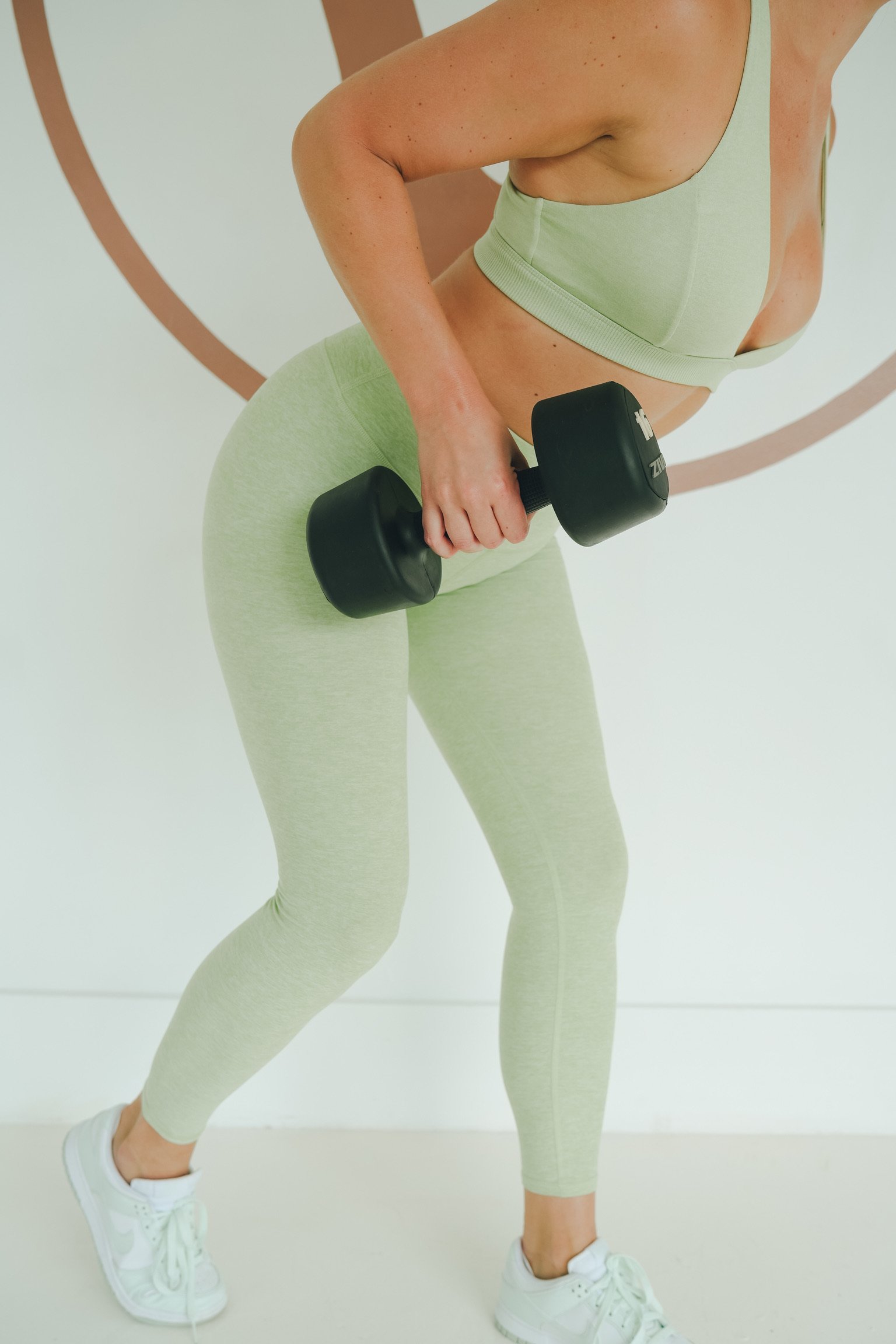
You do not have to lift the heaviest weight in the gym.
But your muscles do need to be challenged.
If you complete 10 repetitions and feel like you could easily perform another 15, the weight may be too light.
If your form completely falls apart after three repetitions, the weight may be too heavy.
A useful goal is to finish your set feeling like you probably had a few good repetitions left.
For example:
You perform 10 reps.
You probably could have completed:
2 or 3 more good reps
if you absolutely needed to.
That is often a reasonable training effort.
You do not need to train every exercise until complete failure.
Progressive Overload Is What Drives Progress
Doing the workout is only the beginning.
To continue building strength and muscle, your training should gradually become more challenging.
This is called:
Progressive overload.
It can mean:
Increasing the weight
Adding repetitions
Performing another set
Improving your technique
Increasing your range of motion
Slowing down the movement
Using better control
For example:
Week 1
Goblet squat:
20 pounds x 8 reps
Week 2
20 pounds x 10 reps
Week 3
20 pounds x 12 reps
Week 4
25 pounds x 8 reps
That is progress.
You do not need dramatic increases.
Small improvements add up.
Keep a Workout Log
One of the easiest ways to improve your workouts is to write them down.
Track:
Exercise
Weight
Sets
Repetitions
For example:
Goblet Squat
3 sets
25 pounds
10, 10, 9 reps
The next time you perform the exercise, you know exactly where you left off.
Without tracking, many women unknowingly perform the same workout for months.
Recording your training gives you something objective to improve.
How Long Should Your Workout Take?
You do not need to spend two hours at the gym.
Many effective strength workouts can be completed in approximately:
45 to 60 minutes
depending on:
Number of exercises
Rest periods
Equipment availability
Training experience
Some sessions may be shorter.
That is okay.
Workout quality matters more than workout length.
How Long Should You Rest Between Sets?
Rest is part of your workout.
You do not need to immediately jump from one set to the next.
For many exercises, resting approximately:
1 to 3 minutes
can help you recover enough to perform your next set well.
Larger exercises such as:
Squats
Deadlifts
Leg presses
Hip thrusts
may require more rest.
Smaller exercises may require less.
If you are still breathing heavily and feel unable to perform another quality set, give yourself more time.
You Do Not Need to Sweat for a Workout to Work
Sweating does not tell you whether you built muscle.
You can sweat because:
The room is hot
You are doing cardio
You naturally sweat easily
And you can have an effective strength workout without being covered in sweat.
Do not measure your workout by:
How exhausted am I?
Measure it by:
Did I train effectively?
Did I use good form?
Did I challenge my muscles?
Am I gradually improving?
That is much more useful.
You Do Not Need to Be Sore
Muscle soreness can happen when:
You are new to training
You try a new exercise
You increase your training volume
You return after a break
But soreness is not required for muscle growth.
Being extremely sore after every workout does not mean your program is better.
Your goal is to recover enough to train consistently.
Not to make walking down the stairs impossible.
What About Cardio?
Cardio can still be part of your routine.
You can include:
Walking
Cycling
Jogging
Swimming
Hiking
Incline treadmill
Recreational sports
But cardio does not need to dominate your program if building lean muscle is the goal.
A simple week might include:
3 strength workouts
Regular walking
1 to 2 optional cardio sessions
Your exact amount depends on your fitness level, preferences and recovery.
You do not need to use cardio to earn your food.
Nutrition Still Matters

You cannot separate muscle building from nutrition.
Your body needs nutrients to support training and recovery.
Protein is especially important.
Include protein sources such as:
Eggs
Greek yogurt
Cottage cheese
Chicken
Turkey
Fish
Lean beef
Tofu
Tempeh
Beans
Protein shakes
Try to distribute protein throughout the day.
For example:
Breakfast - Eggs, toast and fruit
Lunch - Chicken, rice and vegetables
Snack - Greek yogurt with berries
Dinner - Salmon, potatoes and broccoli
Optional Snack - Cottage cheese or a protein smoothie
You do not need a perfect bodybuilding diet.
You need enough nutritious food to support your training.
I put together my favorite fitness, nutrition and wellness products, including items that can help with protein intake, hydration, meal prep, workouts and recovery.
Think of it as a simple place to find products I personally recommend without having to sort through hundreds of options yourself.
Carbohydrates Help Fuel Your Workouts
You do not need to remove carbohydrates to build lean muscle.
Carbohydrates provide energy that can support your workouts.
Options include:
Rice
Potatoes
Fruit
Oats
Bread
Pasta
Beans
Quinoa
Try pairing carbohydrates with protein.
For example:
Before Training
Greek yogurt with fruit
or
Toast with eggs
After Training
Chicken with rice and vegetables
or
Salmon with potatoes
You do not need special pre-workout or post-workout foods.
Normal meals work.
Recovery Is Part of Muscle Building
Your muscles do not grow because you trained harder for one hour.
Training creates the stimulus.
Recovery gives your body time to adapt.
Recovery includes:
Sleep
Nutrition
Rest days
Hydration
Stress management
If you are training intensely every day while sleeping five hours per night and barely eating, adding another workout is probably not the solution.
More is not always better.
Confidence Comes From Repetition
Many women wait until they feel confident before going into the weight room.
But confidence usually comes after you start.
The first time you perform an exercise, you may feel awkward.
The tenth time feels more familiar.
The twentieth time feels normal.
You begin to know:
Where the equipment is
How to adjust the machines
What weights you use
What exercises are next
What good technique feels like
That is how confidence grows.
You do not have to walk into the gym feeling fearless.
You simply need a plan.
Stop Comparing Your Weights to Other People
Someone next to you may be:
Lifting heavier
Running faster
Using a more advanced exercise
That has nothing to do with your progress.
They may have been training for:
Two years
Five years
Ten years
Your goal is not to beat the person next to you.
Your goal is to become stronger than you were.
If you lifted:
15 pounds last month
and now lift:
20 pounds
that is progress.
It counts.
Common Strength Training Mistakes
Changing Workouts Constantly
You do not need a completely different workout every week.
Repeating key movements helps you improve.
Give your program enough time to work.
Lifting Too Light Forever
Starting light is smart.
Staying with a weight that never challenges you is different.
As your strength improves, gradually increase the difficulty.
Lifting Too Heavy Too Soon
Heavy weight is not the goal.
Muscle tension and progressive training are the goal.
If you cannot control the weight, reduce it.
Good form comes first.
Doing Only Lower-Body Workouts
Glute workouts are popular.
But your upper body needs strength too.
Train:
Back
Chest
Shoulders
Arms
along with your legs and glutes.
A balanced program creates a stronger body.
Doing Endless Ab Workouts
Hundreds of crunches are not necessary.
Core training can be included as part of a balanced strength program.
Remember:
Ab exercises strengthen your core.
They do not specifically remove abdominal fat.
Body fat cannot be reduced from one exact area through exercise.
Expecting Results After Two Weeks
Muscle growth takes time.
You might notice strength improvements before major visual changes.
That is normal.
Pay attention to:
Strength
Measurements
Progress photos
Clothing fit
Energy
Confidence
Think in months.
Not days.
A Simple Weekly Schedule
Here is what a realistic training week could look like:
Monday - Full-body strength workout
Tuesday - 20 to 30-minute walk
Wednesday - Full-body strength workout
Thursday - Rest or light activity
Friday - Full-body strength workout
Saturday - Walking, hiking, cycling or another enjoyable activity
Sunday - Rest
This is not the only way to train.
But it shows that you do not need seven intense workouts every week.
How to Know If Your Routine Is Working
Ask yourself:
Are you getting stronger? - Are your weights or repetitions gradually increasing?
Is your technique improving? - Do the exercises feel more natural?
Are you recovering? - Can you complete your next workout without feeling completely exhausted?
Are your measurements or photos changing? - Visual changes often take longer than strength improvements.
Do you feel more confident? - Do you walk into the gym knowing what you are there to do?
All of these are signs of progress.
Getting stronger is an important sign that your training is working, but you may also be wondering how strength training fits into a bigger goal of losing body fat and building a more defined physique.
If that is your goal, read my The 6-Week Body Recomposition Plan for Women (Fat Loss + Lean Muscle Guide).
What Should You Do After Six to Eight Weeks?
You do not automatically need a completely new program.
First, review what happened.
Ask:
Did my strength improve?
Which exercises improved?
Which movements feel uncomfortable?
Am I still challenged?
Am I recovering well?
Am I enjoying the routine?
You may only need small adjustments.
For example:
Increase the weights
Change one or two exercises
Add another set
Move from three to four training days
Continue the same routine and keep progressing
Do not change something simply because you are bored after two weeks.
Give your body enough time to adapt.
Conclusion
Building lean muscle does not require an extreme workout program.
You do not need to:
Train seven days per week
Spend two hours in the gym
Perform dozens of exercises
Be sore after every workout
Lift the heaviest weights possible
Know everything before you start
Instead, focus on:
Strength training consistently
Learning basic movement patterns
Gradually increasing the challenge
Eating enough protein
Fueling your workouts
Sleeping
Recovering
Tracking your progress
Most importantly, stop waiting until you feel completely confident.
Confidence is built through experience.
Every workout gives you another opportunity to learn.
You get stronger.
The exercises become more familiar.
The gym feels less intimidating.
And eventually, you realize that you belong there just as much as anyone else.
The goal is not simply to build muscle.
It is to build a stronger body and the confidence that comes with knowing what your body is capable of.
The WELLTHY approach focuses on realistic nutrition and strength-training habits that help women become stronger, build lean muscle and improve their body composition without extreme fitness rules.
Visit wellthybyerin.com for more support with nutrition, metabolism, strength training and sustainable fat loss.
Frequently Asked Questions
1. How many days per week should women lift weights to build muscle?
There is no single perfect number.
For many beginners, three strength-training sessions per week can be a practical starting point.
More experienced women may train four or more days depending on their goals, schedule and ability to recover.
Consistency matters more than training every day.
2. Will lifting weights make women bulky?
Building a significant amount of muscle takes consistent training, nutrition and time.
Strength training does not automatically create a bulky appearance.
Many women use resistance training specifically to create a stronger, more defined body composition.
3. How heavy should women lift to build lean muscle?
Use a weight that challenges your muscles while still allowing you to perform the exercise with good technique.
If a set feels extremely easy, gradually increase the difficulty.
You do not need to lift the heaviest possible weight.
4. How long does it take to see muscle definition?
The timeline varies based on your starting point, training experience, nutrition, genetics and body fat levels.
Strength improvements may happen before noticeable visual changes.
Think in terms of consistent months of training rather than expecting dramatic changes in a few weeks.
5. Do women need protein powder to build muscle?
No.
Protein powder is simply a convenient protein source.
You can get protein from foods such as:
Eggs
Greek yogurt
Cottage cheese
Chicken
Turkey
Fish
Lean beef
Tofu
Beans
Protein powder can be useful when it helps you meet your protein needs, but it is not required.
Get The WELLTHY Strength Training Planner inside Substack, a practical guide designed to help you build strength, gain lean muscle, and feel more confident in the gym without overcomplicating your workouts. You’ll learn how to structure an effective strength-training routine, focus on the key movement patterns, choose the right exercises, track your sets, reps, and progress, and gradually increase your strength over time. It gives you a simple, realistic framework you can follow consistently to make your workouts more effective and support long-term body composition goals.